The park at the end of your street has a problem you have walked past a hundred times. A knot of plastic cups against the fence. Cigarette butts pressed into the grass by the bench. Someone's takeout bag slowly dissolving into the mulch.
You do not need a committee, a grant, or three months of planning to fix it. You need one Saturday morning, a handful of neighbors, and a plan simple enough that people actually show up. Here is how to pull it off in a single weekend, starting tonight.
Friday Evening: Choose One Small Area and One Time
The biggest mistake first-time organizers make is trying to clean the whole park. Ten volunteers spread across six acres accomplish less, visibly, than eight volunteers working one messy corner. Pick a zone you can actually finish: the playground edge, the path along the creek, the strip by the parking lot.
Walk it before dark with your phone in hand. Note what you see — bottle caps, a dumped sofa cushion, a pile of branches — and roughly how many bags it will take. That ten-minute walk tells you what supplies to bring and keeps you from promising more than you can deliver.
Then lock the logistics:
- Time: a 90-minute window, ideally 9 to 10:30 a.m. It is cooler, and people still have their Saturday.
- Meeting spot: somewhere obvious with room to stand, like the picnic table or the park sign.
- Trash plan: call parks and public works before Saturday and ask where to leave filled bags. Sometimes they pick them up; sometimes you need to haul them to a specific spot.
- A co-host: one other person to share texts, answer questions, and hand out gloves.
One quick call worth making
Some cities ask for a permit or at least a heads-up before an organized gathering on public land, and a few have rules about what can go in the park bins. A two-minute call to the parks department settles both questions. If you are working on private property or a school yard, ask the owner first — it takes less time than you think.
Supplies You Can Round Up in an Afternoon
You do not need much, and you do not need to buy it all. Many parks departments and neighborhood associations lend grabbers, gloves, and safety vests for free, so make that call before you shop. Ask in the group chat, too. Someone always has a wagon.
Bring or borrow:
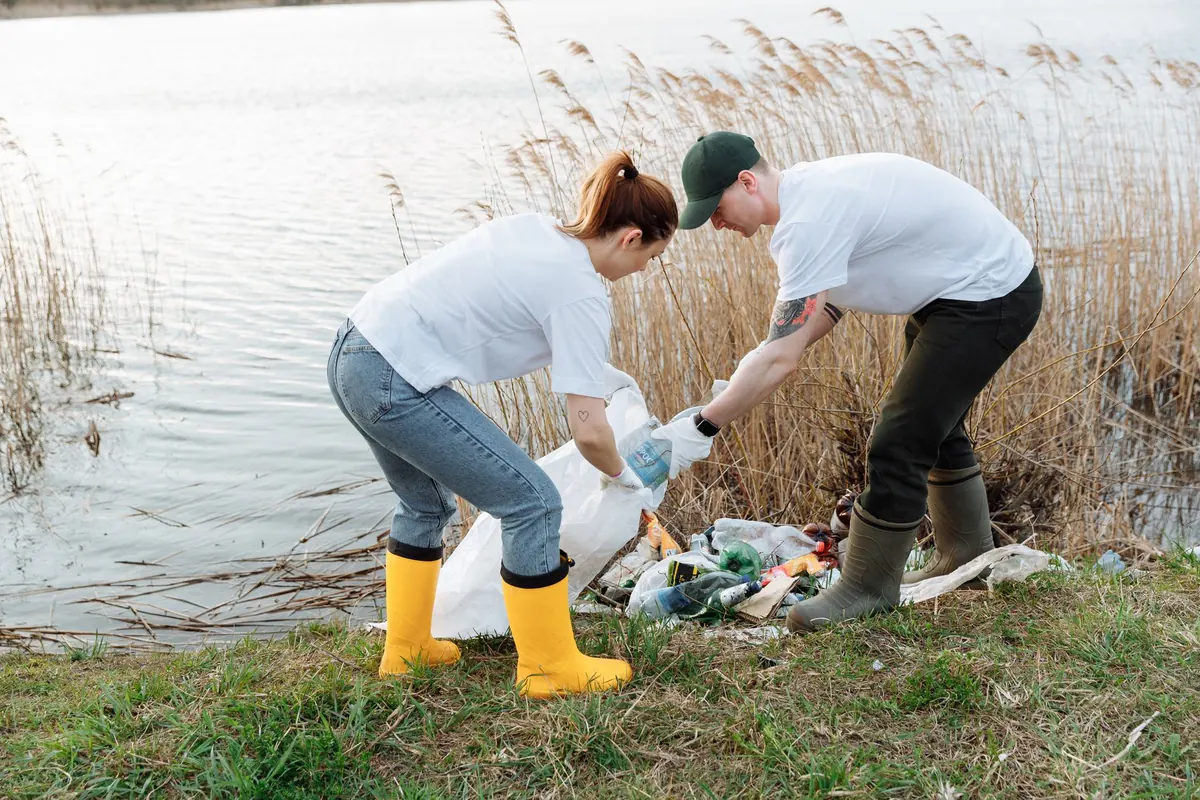
- Thick work or garden gloves, one pair per person (thin disposable gloves tear on the first branch)
- Litter grabbers or kitchen tongs, so nobody has to touch anything questionable
- Sturdy bags or five-gallon buckets — buckets stay open in the wind and are easier to fill
- One separate bin or bag for cans and bottles if your area recycles
- A wagon or wheelbarrow for the heavy, awkward stuff
- A first-aid kit, hand sanitizer, water, and sunscreen
- A tarp to stage bags on so nothing leaks into the grass
Invitations That Get Yeses
Broad announcements get nods. Specific asks get people. Tell neighbors exactly what you need and how long it will take: "Saturday, 9 a.m., 90 minutes, meet at the park sign. Bring gloves if you have them."
Use whichever channels already exist — the block group chat, a text thread, a paper flyer taped up where your building allows it. Post once early in the week and once Friday evening. If you can, knock on five doors in person. A personal invitation converts far better than a flyer, and it also tells you who is coming, which matters when you are counting gloves.
Say yes to kids, leashed dogs, and people who can only stay twenty minutes. Set the expectation that this is easy and casual. Nobody wants to RSVP to a chore.
The Two-Minute Safety Talk Before Anyone Starts
Gather everyone before the first bag is filled and say these things out loud. It takes two minutes and prevents the one incident that ruins the morning.
- Use a grabber or tongs — never bare hands — for anything sharp, wet, or unidentifiable.
- Do not touch needles, syringes, or suspicious containers. Mark the spot, keep everyone back, and call the city's non-emergency line or your parks contact.
- Leave dead animals, chemical containers, and anything that looks like hazardous waste alone. Report those too.
- Stay out of the water, off roadways, and away from storm drains and steep banks.
- Wear long sleeves and closed shoes in dense brush. Watch for poison ivy and ticks, and wash up afterward. If a rash, cut, or bite looks worse than a scrape, check with a health professional rather than guessing.
- Keep children within sight of an adult and pair younger kids with a buddy.
- Lift with two people. A single bag of soggy trash gets heavy fast.
Then set a finish line. When the bags are stacked on the tarp, everyone stops. Ending on time is how you get people to come back.
Make It Feel Like a Block Party, Not a Chore
Small touches change the mood. Put a speaker on the picnic table. Bring coffee, cold water, and something to share. Take a photo of the group before you start and of the same spot when you finish — that before-and-after pair is the single best thing you can post afterward.
Count the bags out loud as you stack them. Fifteen bags of litter is a real number, and it belongs to the people standing there.
The 45 Minutes After Everyone Leaves
This is the part that turns a one-off into a habit. Before you sit down:
- Send a thank-you message with the photo, and name the people who showed up.
- Confirm the bags were picked up, or take them where the city told you to.
- Report anything you could not remove — the dumped tire, the needle, the broken bench.
- Write down the date of the next one, even if it is vague: "first Saturday in June."
- Keep the list of volunteers. That list is the whole asset.
Keep It Small, Keep It Going
One cleaned corner will not stay clean forever. But a group of neighbors who have spent 90 minutes picking up cups together is a different kind of neighborhood than it was on Friday. The park looks better, and the next favor anyone needs — a jump start, a borrowed ladder, a hand moving a couch — is easier to ask for.
Start with one Saturday. Pick the corner. Send the text tonight.
Photo: Thirdman / Pexels